
 Ready Together
7/7 Survivor, Thelma Stober calls for UK resilience-building efforts to put survivor learnings front and centre
News and blogs7/7 survivor Thelma Stober, highlights the need to put survivor learnings front and centre in UK resilience-building efforts.
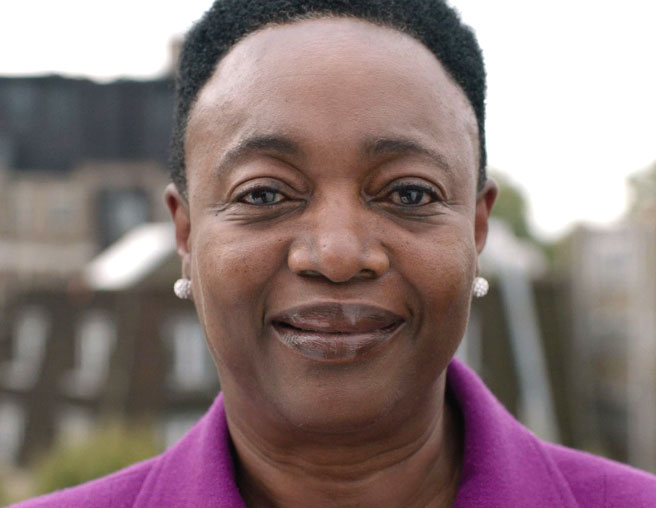
Thelma is a survivor of the 7/7 London bombings, Deputy Lieutenant for Greater London and Co-Chair of the Grenfell Memorial Commission. She is also a Trustee of the National Emergencies Trust and chairs its Survivors Advisory Forum. The following article is an excerpt from Thelma’s recent blog for the National Preparedness Commission.
As I know only too well from my own experiences as a survivor of the 7/7 bombings, those whose lives are upended by disasters face incredibly complex needs, ranging from physical, and psychological to practical and financial. Now is the time to really understand and account for these. Both within current resilience-building efforts and during future emergency responses.
It was admirable that the National Resilience Strategy's call for evidence last year was open to the public. I wonder though how many survivors of emergencies were aware of this, and how many actually responded themselves, or even know there is a new strategy? How much stronger could it be if they did? We would all accept that the response to any disaster must be tailored to the actual emergency. People affected by serious flooding may not bear any physical scars, for instance, but the emotional ones can be long-lasting and may require support long after more practical considerations are addressed.
Within the UK charity sector, the National Emergencies Trust is committed to survivor-led learning and change. Conceived by the Charity Commission and co-created with sector peers and emergency survivors, like myself, the Trust launched in 2019 as a direct response to the learnings identified after the Grenfell Tower fire and terror attacks in London and Manchester in 2017. Hundreds contributed to its 2019 Survivor Consultation, and today its Survivors Advisory Forum, which I’m privileged to Chair, guides the charity’s work.
Members of the Survivors Advisory Forum inform and shape the Trust’s strategies and processes. With their unique lived experience of past emergencies, they bring to life complexities and nuances they have had to navigate that could easily be overlooked.
One of the insights from the Survivors Advisory Forum has been the need to pay particular attention to psychological support for children and young people affected by disasters who have historically been overlooked or underserved. It is this survivor insight that has led to the Trust’s support for a unique research project designed by and for young Manchester survivors in partnership with Lancaster University, and led by Dr Cath Hill, a social worker and survivor of the Manchester Arena attack, along with her son. Launching this Summer, the ‘Bee The Difference’ project will call for young Manchester survivors to share what support they have received since 2017 and how helpful this has been. Insights will not only shape the Trust’s funding strategy but hopefully inform wider societal efforts at a time when the mental health of young people is coming into sharper focus.
Then of course there is the need to support survivors’ physical rehabilitation. In my own case, when I lost part of my limb during the 7/7 attacks, the NHS was unable to offer me a prosthetic that matched my skin tone. After what I had been through, this was devastating. Fortunately, I was able to use a financial gift from the London Emergencies Trust to cover the cost of a matching prosthetic privately. While a financial gift like the one I received can’t take away physical or psychological trauma survivors or loved ones have experienced, it can make a life-changing difference to their outlook.
The process of applying for funds is something survivors point to as one of the most painful of their lived experiences. In past emergencies, including those in 2017, people suffering immense personal trauma were required to make multiple applications for funds from different places. Each new application a new request to relive traumatic events and recount tragic circumstances. The Trust was created to remove this requirement in the future by offering one trusted place to give, and receive, funds. Since its launch it has also secured two amendments to UK legislation to ensure that those who receive financial gifts from the National Emergencies Trust can continue to receive their State support.
Importantly, financial gifts are just one of the ways to support those affected by emergencies. Physical and psychological support services play a vital part too. For instance, young survivors of the Manchester Arena attacks have told us that access to free, local physio sessions proved invaluable. But of course, one consideration for response efforts is how to make these support services available to those not local to the emergency’s location. How do we help the young Manchester survivor who travelled home to Wales the following day?
Engaging with survivors of past emergencies is vital in designing responses that can learn from and better support people affected by future ones. The tragedy at Grenfell has also shown the wider resilience community that we need to meaningfully engage with the local community and individuals impacted at the time. While good preparation is key, we know that each emergency and individual is different. By exploring potential needs, we will be best prepared when the worst happens again.
You can read Thelma’s full blog post on the National Preparedness Commission website (opens in a new tab).