

 Ready Together
Reflections from Dr Cath Hill on supporting young people in Southport
News and blogsDr Cath Hill speaks to National Emergencies Trust to share guidance on supporting young people affected by the Southport attack.
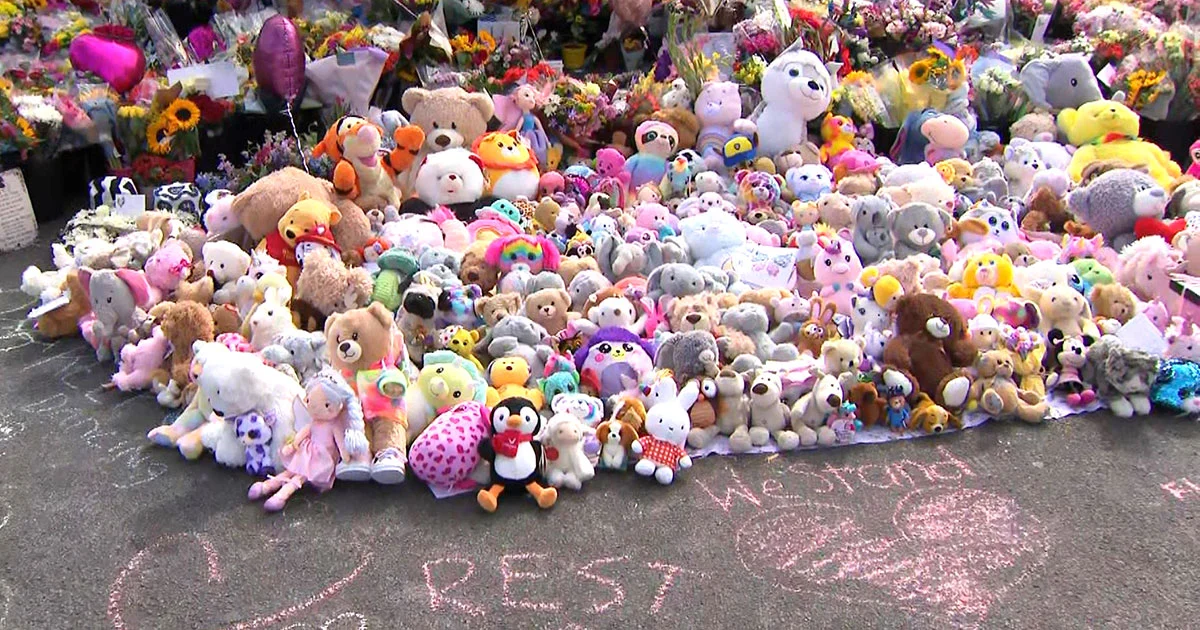
In the aftermath of the dreadful attack in Southport last week, National Emergencies Trust speaks to Dr Cath Hill; member of the Trust’s Survivors Advisory Forum, Lecturer in Social Work at Lancaster University, and Manchester Arena attack survivor. Dr Hill was Lead Researcher on the Bee The Difference report, a collaboration with nine young Manchester Arena attack survivors.
In our Q&A with Dr Hill, she shares some of the key recommendations from the more than 200 young people that contributed to Bee The Difference. Although there are different circumstances between the two incidents, the guidance shared in Bee The Difference is in many ways relevant to the Southport community, including the importance of timely, accessible and age-appropriate wellbeing support for children and young people following a traumatic incident.
What is the immediate priority now for children and young people in Southport?
The tragic incident in Southport goes against everything that we expect our children to experience. In this very initial recovery stage, those affected need to feel safe, supported and where possible be offered the chance to be open and honest about their feelings. They need to be kept updated about what is happening to them, their family and friends and their community. Our instinct as adults is to overprotect children and shield them from some of the realities, but for some children this overprotection can be detrimental and lead to them making incorrect assumptions which may be more harmful to them.
For community leaders, the focus needs to be on ensuring that timely support can be offered to all those who feel affected, and that support is offered by sufficiently trained people, in an accessible way. Survivors should not have to search for that support; it should be proactively offered.
What does the Bee The Difference research tell us about young people’s responses following an incident like this?
We know that incidents like this have a profound impact on children and young people and to dismiss how much they will be affected on account of their age is hugely problematic. Our research showed that it can affect a child’s ability to engage in education, social activities and relationships with family and friends. Unsurprisingly, it affects their sense of safety, their understanding of the world and, even though they may not understand all elements of what happened to them, they will feel loss, guilt and grief as adults do.
We also learned that young people respond differently and that proximity to the incident is not always an indicator of who is affected the most. We learned that there are many elements which can lead to children responding in individual ways, such as previous experiences of trauma, lack of secure support systems and being neurodiverse. After Manchester, some of the young witnesses were dismissed on the basis of not being physically hurt and told that they should “get over it” and “it wasn’t that bad”. This compounded their feelings of guilt and led to further issues down the line.
On a more positive note, we need to realise that children do find ways to cope. Young survivors of the Manchester attack sought out support from teachers, friends and family members. Smaller children reported effective help via play and creative craft sessions, and for teenagers, peer support was stated as being important.
We should encourage children to speak as much as they feel is possible, to be open about their feelings and then to recognise and respond to their individual needs.
How can families open up and start conversations about what has happened?
After the Manchester Arena attack, we found that some children were scared to tell their parents how they felt because they were worried about upsetting their parents, who they love so much. Finding ways to share feelings is important. For those who struggle to articulate this, it can be through notes, pictures, WhatsApp messages, whatever works for that young person. It could be important to find an adult they feel able to speak with, such as a teacher, a counsellor, or even an older sibling.
What is important is that we need to validate young people’s experiences and deal with them with compassion and thoughtfulness; not dismiss that they're ‘just children’ and assume they'll bounce back quickly.
What was missing from the Manchester response that we can learn from to benefit the Southport community?
There were some wonderful professionals and people in the community that really stepped up and helped, as we are heartened to now see in Southport. However, we also know that there were many young people that felt that they didn't get the help and the support that they needed (or continue to need). Child and adult mental health services already decimated by austerity, struggled to cope and therefore many young people were left waiting on long waiting lists for psychological support, or offered support by charities who were not sufficiently trained to work with children affected by this level of trauma.
After this event, funding and resources need to be allocated to offer children and young people support when they need it, and in a way that is appropriate for them and their developmental stage. Separate, ringfenced money should be provided, so the children affected in Southport do not have to enter into an already struggling system and find themselves unable to access the appropriate support they need.
In addition, teachers and others who will be working with children affected, need to be offered training and support as this will be challenging for them and for most will go beyond anything they have learned in their training to be educators (not psychologists). Support for parents will also be vital. Many parents after Manchester found peer support with other parents invaluable.
Is there any hope after this terrible incident?
Yes, there is. We know that for many children in Southport, this is a really difficult acute time, but with more time, love and support, these courageous children will find their way and will manage to cope (as will their parents). Whilst we can’t assume that all children are resilient, many are and often show adults how to find hope and playfulness, when there doesn’t seem to be any.
Our research was filled with positive stories of strength and resilience and a life changed, but a life that is positive and filled with opportunity.
Thanks to the more than 200 young Manchester Arena attack survivors who took part in the Bee The Difference research, we have a better understanding on how we can better support young people affected by traumatic events in the future. The report highlights six ways that individuals and institutions can help to create change together:
- Bee visible - Ensure support is visible and readily available so the onus is not on survivors to find it
- Bee compassionate - Listen to, validate and take proactive steps to accommodate young survivors’ new needs
- Bee experienced - Make sure that specialised trauma support is accessible and readily available, wherever survivors are based
- Bee flexible - Empower young survivors to choose the right support for them
- Bee patient - Remember that recovery isn’t linear and can take time
- Bee proactive - Act on young survivors’ experiences to turn their challenges into future change.
Useful links
- Bee The Difference – a research project by and for young Manchester survivors
- Southport Strong Together appeal (opens in a new tab) - the Community Foundation for Merseyside, in partnership with Sefton Council and Sefton CVS, has activated an urgent fundraising appeal for all those affected by the knife attack in Southport on 29 July 2024.