
 Ready Together
Turning learnings into legacies for Grenfell Survivors
News and blogsNational Emergencies Trust Trustee, John Barradell reflects on leading the response to the Grenfell Tower fire and lessons learned five years on.
Creating change in their name: we must turn learnings into legacies for Grenfell Survivors and loved ones
By John Barradell OBE
Five years ago this week the devastating fire at the Grenfell Tower in West London claimed the lives of 72 people. For thousands of others, life would never be the same again.
Last month as I gave evidence at the Grenfell Tower Inquiry about the role I played and what I observed in the aftermath of that tragic event, I was acutely aware that the scars the fire left behind - emotional and physical - are still keenly felt by so many today. It is a tragic truth that some of these scars may never heal.
But the fire will also leave behind a multitude of learnings for almost every facet of our society, and it is by acting on these to create positive change that we can best honour those affected by Grenfell - and ensure the best possible outcomes for future emergency survivors and their loved ones.
When the Inquiry concludes, the extent of those learnings will start to become clear, but for my own part I believe that that change starts by putting survivors and loved ones’ needs at the centre of all decision-making during future disasters.
I believe that every person playing a part in future response efforts must commit to doing their best by the individuals or community affected, regardless of the potential personal cost. Because if that is the case, then that is all that matters at that moment. Any consequences from their choices can be dealt with at a later date in the context of their personal commitment.
During the Grenfell response, and during emergencies I was involved with prior to it, the way I tested my own personal commitment to survivors was to ask myself the question: “How would I feel if my mother was treated this way”? I would do this constantly about every new scenario that arose because once you know the answer to that question, you know the sort of action that you need to take.
A huge part of putting survivors at the forefront of decisions is ensuring that the local community in the area affected is empowered to lead the response. It is the compassionate and impassioned local groups that will always spring into action first when the worst possible happens. The local Community Centres. The Mosques and Church groups. The youth clubs and schools. The neighbourhood charities.
These organisations really know their communities; what they need and how they work. As well as being the first to act they will be the last one’s standing to offer support long after the event has stopped making headlines. But as we’ve seen all too often during major emergencies, including during the Grenfell response, these groups are so busy responding to what’s needed in the moment that their efforts and impact can be overlooked. They have immense capability, but their capacity to support can be curtailed, either by a lack of resources or simply the ‘right’ connections.
During future emergency events this simply cannot be the case. We need blueprints that empower grassroots groups to take control in the immediate and longer-term; that unlock the unmatched value of their lived, local experience.
In this regard, the launch of the National Emergencies Trust was one of the first steps taken in the right direction. On the recommendation of the Charity Commission in the aftermath of Grenfell, the Trust was set up in 2019 to harness the nation’s generosity in the face of disasters, and distribute those funds quickly and fairly to wherever they can make the biggest impact on survivors’ lives. Whether that’s as financial gifts for individuals affected, grants for invaluable local groups making an impact on the ground, or national charities providing specialised, targeted support.
During a domestic disaster the Trust will always prioritise funding for grassroots groups and individuals. It will also always work with its network of survivors from past emergencies to ensure people’s complex new needs are understood, and met, in the best way possible.
The Trust’s first emergency appeal, the Coronavirus Appeal, raised £100million for those affected by the pandemic with just under £80million of this flowing out to 14,000+ grassroots projects right across the UK through UKCF and its network of 47 Community Foundations. The Appeal proved the strength of a local-first funding model and the value of a collaborative and coordinated approach to fundraising across the sector. Something that can now be readily applied to the next localised domestic disaster.
I now believe we can all work to foster and nurture the legacy of street-level community resilience that shone out in the aftermath of Grenfell and re-emerged right across the UK during the pandemic. We saw neighbourhoods come together to organise themselves into informal networks. We saw knowledge created at speed about who needed what, and who was best placed to provide help. But the importance of this kind of activity is vastly understated. It’s not only inherently good for individuals, especially those at higher risk of isolation, but when an incident arises it means the community is well placed to advise public services, or charities like the Trust, about where to focus their efforts to make the biggest impact. It’s why getting involved in street level resilience-building now is a small step we could all take that could make a huge difference for now and into the future.
Earlier this week I joined many others to pay my respects to the 72 people who lost their lives to the Grenfell Tower fire, and to the thousands nursing scars, seen and unseen. I will continue to turn my attention to what we can learn and improve as a society as a result of what they have had to experience over the last five years. Because surely the best legacy we can leave for all those affected by Grenfell is the change we can create together in their name.
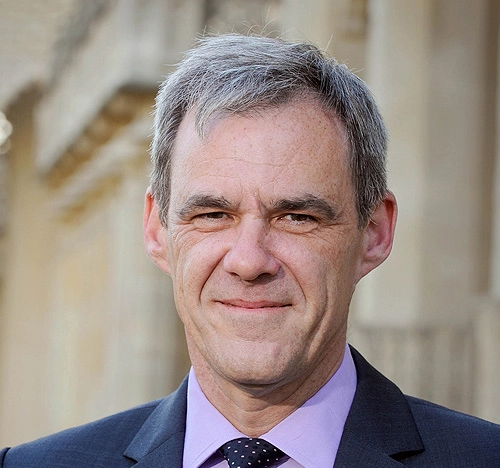
John Barradell OBE is the Town Clerk & Chief Executive of the City of London Corporation and a Trustee of National Emergencies Trust. He has been actively involved in resilience-building and emergency response at a London-wide and national level, led the response to the Grenfell Tower fire in 2017 and chaired the London Covid-19 Strategic Coordination Group. John is Deputy Chair of the London Local Resilience Forum (LRF) and was the Chair of the Local Authorities Panel of the LRF.